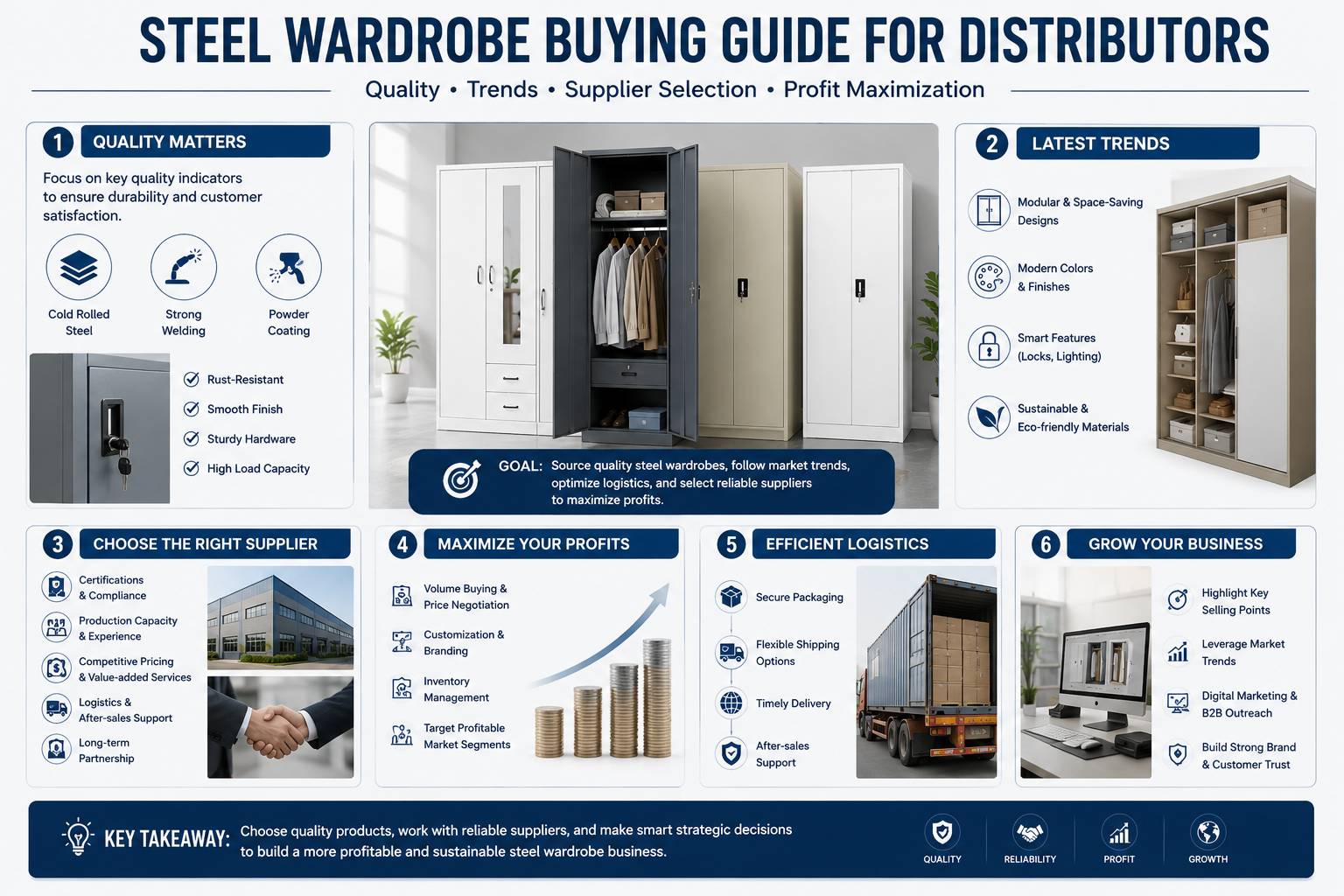

Abstract: Discover a practical guide for furniture distributors to source quality steel wardrobes, follow market trends, optimize logistics, and select reliable suppliers for higher profits.
1. Introduction
The steel wardrobe market is rapidly evolving, driven by advances in manufacturing, changing customer preferences, and global supply chain shifts.
For furniture distributors, steel wardrobes offer attractive profit margins, stable long-term demand, and growth opportunities across both B2B and B2C channels. However, maximizing profitability depends on making informed sourcing decisions. Product quality, design, pricing, and supplier reliability can all have a direct impact on business performance.
This guide provides practical insights for distributors sourcing steel wardrobes, covering key quality standards, the latest market trends, logistics optimization, and supplier selection.
The goal is simple: to provide a practical sourcing strategy that helps reduce purchasing risks, control costs, and improve profitability.
2. Understanding Steel Wardrobe Quality
Key Quality Indicators
Product quality is the foundation of a profitable steel wardrobe business. When evaluating suppliers, distributors should pay close attention to the following factors:
-
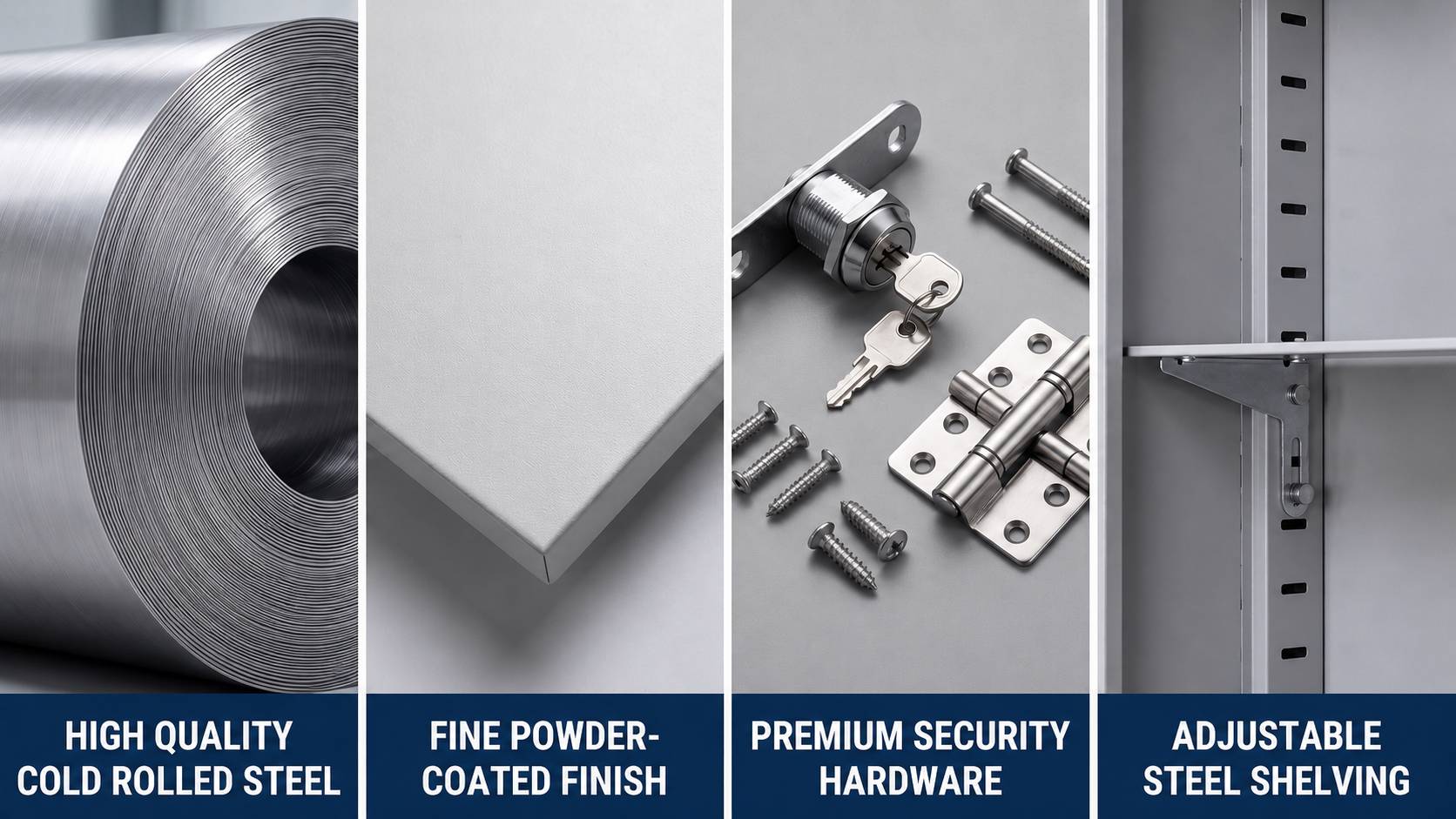
Material Grade: Choose high-quality cold-rolled steel with an appropriate thickness, typically 0.6–1.2 mm, depending on the product's application.
-
Welding & Joints: Check that welding points are strong and clean, with no sharp edges, visible gaps, or excessive welding material.
-
Surface Finish: Powder coating, enamel, or epoxy finishes can provide good corrosion resistance while improving the product's appearance.
Durability Factors
Durable products can increase customer satisfaction while reducing returns and after-sales costs.
-
Rust Resistance: Galvanized steel or high-quality powder-coated surfaces can provide better protection against humidity and corrosion.
-
Load Capacity: Shelves should have sufficient load-bearing capacity to meet everyday storage requirements. Typical capacity may range from 30–50 kg per shelf, depending on the design.
-
Hardware: High-quality hinges, locks, and handles can improve product durability and user experience. Stainless steel or reliable branded hardware is recommended.
Bulk Order Inspection Checklist
Before placing a large order, distributors should check:
-
Whether steel thickness meets the agreed specifications
-
Whether welding quality and product structure are consistent
-
Whether color, texture, and surface finish are uniform
-
Whether doors open and close smoothly
-
Whether locks, hinges, handles, and other hardware work properly
-
Whether products are free from dents, scratches, and other defects
-
Whether required safety features are included
3. Latest Trends in Steel Wardrobes
Popular Designs and Layouts
The steel wardrobe market is moving beyond basic utility products toward more flexible and design-oriented solutions.
Traditional Wardrobes
Classic single-door and double-door wardrobes remain popular, especially for schools, dormitories, offices, factories, and other institutional applications.
Modular Designs
Modular wardrobes offer customizable shelves, racks, sliding doors, and flexible layouts. These features make them suitable for modern homes, apartments, offices, and commercial spaces.
Color and Surface Finish Trends
Modern buyers are increasingly looking for products that combine functionality with contemporary aesthetics.
-
Muted Colors: White, gray, pastel, and other low-saturation colors work well with modern interiors.
-
Matte Finishes: Matte surfaces provide a clean and contemporary appearance.
-
Metallic and Dual-Tone Designs: These finishes can add a modern look and help products stand out in competitive markets.
Sustainable and Eco-Friendly Manufacturing
Sustainability is becoming increasingly important in furniture sourcing.
-
Recycled Steel: Using recycled steel can help reduce environmental impact.
-
Low-VOC Coatings: Environmentally friendly coatings and paints are increasingly preferred in institutional, commercial, and hospitality projects.
For distributors, eco-friendly products can open new market opportunities, strengthen brand positioning, and potentially support higher product margins.
4. Evaluating Manufacturers and Suppliers
How to Select a Reliable Manufacturer
Choosing the right supplier is one of the most important decisions for a furniture distributor.
Consider the following factors:
-
Certifications: Check ISO 9001, ISO 14001, and other certifications or compliance requirements relevant to your target market.
-
Industry Experience: Review the manufacturer's years of experience, export markets, customer references, and production capabilities.
-
Customization Capability: Make sure the supplier can provide customized sizes, colors, designs, packaging, and branding when required.
-
Production Capacity: Confirm that the supplier can consistently meet your required order quantities and delivery schedules.
Comparing Pricing and Value-Added Services
The lowest unit price is not always the best purchasing option. Distributors should evaluate the total value of the supplier's offer.
-
Transparent Pricing: Request detailed quotations to understand the product and logistics costs.
-
Volume Discounts: Negotiate better prices for bulk orders, repeat purchases, or long-term cooperation.
-
Packaging Solutions: Optimized packaging can reduce damage and transportation costs.
-
Branding Services: OEM and private-label services can help distributors build their own brands.
-
Flexible Services: Services such as customized packaging or drop shipping may help reduce operational costs.
Logistics and After-Sales Support
A reliable supplier should provide efficient logistics and responsive after-sales service.
Key points to evaluate include:
-
Flexible shipping terms such as FOB, CIF, or DDP
-
Clear production and delivery schedules
-
Strong export packaging
-
Trackable shipments
-
Fast response to warranty claims
-
Spare parts and replacement support
Building Long-Term Supplier Relationships
A successful supplier relationship should be based on long-term cooperation rather than one-time transactions.
Clear communication, regular feedback, consistent orders, and transparent expectations can build trust between both parties.
Strong supplier relationships can also lead to better pricing, priority production, improved service, and faster product development.
5. Maximizing Profits Through Strategic Buying
Volume Purchasing and Price Negotiation
Bulk purchasing can provide distributors with stronger negotiating power.
Consider negotiating based on:
-
Order quantity
-
Annual purchasing volume
-
Long-term contracts
-
Repeat orders
-
Container utilization
-
Seasonal purchasing opportunities
Instead of focusing only on the unit price, evaluate the complete landed cost, including packaging, shipping, duties, and other logistics expenses.
Customization and Branding Opportunities
Customization can help distributors differentiate their products from competitors.
Potential customization options include:
-
Product dimensions
-
Colors
-
Door designs
-
Lock systems
-
Internal layouts
-
Logos and branding
-
Packaging
-
OEM and ODM designs
Customized products can help distributors target specific customer groups and create additional profit opportunities.
Inventory Management
Effective inventory management helps reduce storage costs and avoid stock shortages.
Distributors should:
-
Monitor sales data regularly
-
Identify fast-moving products
-
Maintain appropriate safety stock
-
Reduce slow-moving inventory
-
Plan purchasing around seasonal demand
Targeting Profitable Customer Segments
Steel wardrobes can serve many markets, including:
-
Furniture wholesalers
-
Retailers
-
Office furniture suppliers
-
Schools and universities
-
Hotels and hospitality businesses
-
Factories and warehouses
-
Gyms and sports facilities
-
Government and institutional projects
Identifying the most profitable customer segments can help distributors allocate marketing budgets more efficiently.
6. Marketing Steel Wardrobes as a Distributor
Key Selling Points
When promoting steel wardrobes to retailers and resellers, focus on clear and practical benefits:
-
Strong and durable construction
-
Long service life
-
Modern designs
-
Customizable sizes and colors
-
Flexible storage configurations
-
Competitive wholesale pricing
-
OEM and private-label options
-
Efficient packaging and shipping
Leveraging Market Trends
Market trends can be turned into effective marketing opportunities.
For example:
-
Highlight eco-friendly materials and coatings.
-
Promote modern colors and matte finishes.
-
Showcase modular and customizable designs.
-
Use real project cases and customer testimonials.
-
Demonstrate product durability and storage capacity.
Digital Marketing and B2B Outreach
Digital channels can help distributors reach more potential buyers.
Recommended strategies include:
-
Build an SEO-optimized product catalog.
-
Use high-quality product images and videos.
-
Provide downloadable product catalogs and specifications.
-
Run targeted Google Ads and LinkedIn campaigns.
-
Develop B2B customers through industry platforms.
-
Participate in online furniture exhibitions and trade events.
7. Common Challenges and How to Overcome Them
Managing Product Quality Issues
Quality problems can lead to returns, customer complaints, and financial losses.
To reduce these risks:
-
Establish clear product specifications before production.
-
Conduct pre-shipment inspections.
-
Consider third-party quality inspections for large orders.
-
Work with suppliers that provide clear warranty and after-sales policies.
-
Confirm spare parts availability.
Adapting to Changing Customer Preferences
Customer preferences can change quickly, especially in residential and commercial furniture markets.
Distributors should:
-
Monitor market trends regularly.
-
Collect feedback from retailers and end customers.
-
Test new designs with smaller orders.
-
Adjust product selections based on sales performance.
-
Maintain flexible relationships with manufacturers.
Coping With Supply Chain Disruptions
Global logistics and supply chains can be affected by unexpected events.
Distributors can reduce risks by:
-
Working with multiple qualified suppliers.
-
Avoiding excessive dependence on a single manufacturer.
-
Building reasonable safety stock.
-
Planning orders ahead of peak seasons.
-
Negotiating favorable payment terms.
8. Conclusion
Key Takeaways
Successful steel wardrobe distribution depends on several key factors: sourcing reliable products, understanding market trends, choosing trustworthy suppliers, controlling logistics costs, and maintaining effective marketing strategies.
Actionable Steps for Distributors
-
Establish a clear product quality checklist.
-
Evaluate suppliers based on quality, price, capacity, and service.
-
Monitor market trends and customer feedback.
-
Negotiate competitive pricing and value-added services.
-
Optimize packaging and logistics to reduce total costs.
-
Invest in digital marketing and B2B customer development.
-
Build long-term relationships with reliable manufacturers.
Stay Ahead of the Market
The steel wardrobe market will continue to evolve as customer preferences, technology, design trends, and global supply chains change.
Distributors who focus on product quality, follow market trends, optimize sourcing, and build strong supplier relationships will be better positioned to achieve higher profits and lower business risks.
Stay informed, stay flexible, and make smarter sourcing decisions to build a stronger and more competitive steel wardrobe business.
Ready to upgrade your steel wardrobe sourcing? Connect with a reliable manufacturer and expand your product offering today!