

What Steel Thickness Is Best for a Filing Cabinet?
==================================================
Filing cabinets are essential in both home offices and commercial environments, providing organized, secure, and accessible storage for documents and valuable items. While many factors influence the choice of a filing cabinet—such as design, size, drawer configuration, and locking mechanisms—one aspect is often overlooked: the thickness of the steel used in its construction. Yet, steel thickness is a core determinant of a filing cabinet’s durability, security, and cost-effectiveness.
In this comprehensive guide, we reveal why 0.4mm steel has become the optimal choice for filing cabinets. By comparing different steel gauges and highlighting the key factors you should consider, this blog will equip you to confidently select the most durable and value-driven metal storage cabinet for your needs.
Why Does Steel Thickness Matter?
Steel thickness affects the following critical aspects:
- Durability: Thicker steel resists dents, warping, and general wear.
- Security: Thicker cabinets are harder to break into or damage.
- Weight: Heavier cabinets may be more difficult to move or install.
- Cost: Thicker steel typically costs more due to the higher material and manufacturing demands.
Understanding these trade-offs is crucial to making an informed choice when purchasing a filing cabinet.
Why 0.4mm Steel Is the Optimal Thickness for Filing Cabinets
Over time, manufacturers and users have gravitated toward 0.4mm steel as the sweet spot for filing cabinets, and for good reason.
Key Advantages of 0.4mm Steel
-
Balance of Strength and Weight0.4mm steel is durable enough to resist most day-to-day impacts and general use. It provides significant strength without making the cabinet overly heavy. This makes moving or reconfiguring office spaces more manageable.
-
Enhanced Cost-EffectivenessThicker steel adds cost. At 0.4mm, you get a robust cabinet without paying a premium, making it ideal for large or budget-sensitive installations.
-
Adequate SecurityWhile the thickest steel may be necessary for safeguarding valuables in high-risk settings, 0.4mm is ample for protecting documents and materials in most office environments.
-
Sufficient for General Storage NeedsFor storing files, paperwork, and common office supplies, 0.4mm provides plenty of structural integrity, so drawers do not bend or warp even when fully loaded.
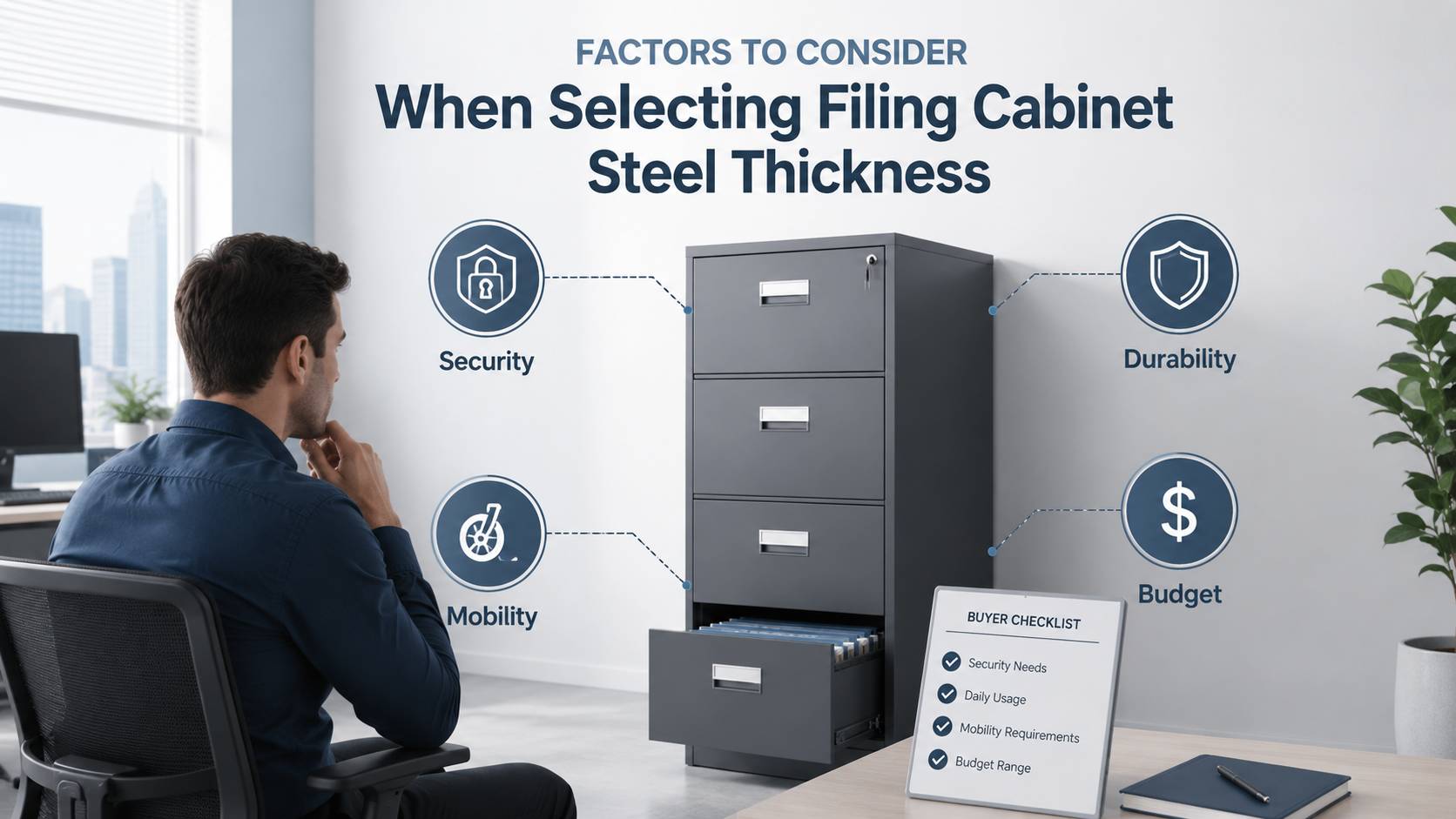
Factors to Consider When Selecting Steel Thickness
Not every office is the same, and your ideal steel thickness may vary based on specific needs. Here’s what to keep in mind:
Security Requirements
If your cabinet will hold sensitive or valuable documents (legal, financial, medical, etc.) or if it's in an area with high risk of unauthorized access, you might want a thicker gauge (e.g., 0.6mm or even 0.8mm). For standard office use, 0.4mm typically suffices.
Durability and Impact Resistance
In high-traffic environments where cabinets may be frequently bumped or moved, thicker steel resists dings and wear over time. However, if your cabinet resides in a relatively protected or personal workspace, 0.4mm will usually handle regular use.
Weight Capacity and Structural Integrity
Thicker steel is beneficial if you plan to store heavy items or stack files to capacity. However, modern 0.4mm steel cabinets are engineered with reinforcing bars and structural folds, giving them impressive load capacities despite their lighter construction.
Mobility: Wheeled vs. Stationary
If you need to move your filing cabinets often, lighter models with 0.4mm steel are preferable. Heavier, thicker steel cabinets are more cumbersome, though they offer greater stability in stationary applications.
Budget Constraints
Steel pricing is largely dependent on thickness. While 0.8mm or 1mm may offer unbeatable strength, the cost quickly adds up. 0.4mm provides a cost-effective solution, especially for outfitting multiple offices.
Comparing Steel Thickness: Which Is Best?
Different environments and use cases may call for different steel thicknesses in filing cabinets. Let’s break down the primary categories:
Residential vs. Commercial Filing Cabinets
- Residential Cabinets: For home use, where theft or abuse is unlikely, 0.4mm is usually sufficient. It ensures affordability and ease of handling.
- Commercial Cabinets: In fast-paced offices or shared workspaces, 0.4mm to 0.6mm offers the resilience and security necessary for frequent access and moderate risk.
High-Traffic vs. Low-Traffic Environments
- High-Traffic: Consider 0.6mm or reinforced 0.4mm cabinets.
- Low-Traffic: 0.4mm holds up well, especially with quality finishes.
Type of Stored Items
If you’re primarily storing paperwork, receipts, or other non-valuable items, 0.4mm steel fits the bill. For cash, valuables, or highly sensitive materials, a thicker gauge paired with advanced locks is recommended.
Expert Recommendations and Industry Standards
Most modern offices now opt for 0.4mm cabinets due to advances in engineering and materials science. Reinforcements, locking mechanisms, and design improvements allow high-performance at moderate steel thickness.
Additional Features Influenced by Steel Thickness
The thickness of your filing cabinet’s steel doesn’t just impact basic strength—it affects other essential qualities and features.
Drawer Mechanism Durability
Heavier drawers place stress on runners and slides. A 0.4mm steel cabinet, if equipped with quality hardware, will provide years of reliable service without sagging or sticking.
Anti-Tip and Safety Features
Safety bars and anti-tip mechanisms are crucial in preventing accidents. Even in 0.4mm cabinets, integrated reinforcements can deliver security and peace of mind.
Finishing and Corrosion Resistance
Thicker steel is less prone to flexing, which can protect the finish. However, modern powder coatings and rust-resistant treatments applied to 0.4mm cabinets rival their thicker counterparts for long-term durability.
Tips for Evaluating Filing Cabinets Before Purchase
Before making a purchase, consider the following steps to ensure you’re getting the ideal cabinet for your requirements.
Check Manufacturer Specifications
Reputable vendors should provide clear details about steel thickness, type of finish, load capacity, and warranty. Examine this information closely; specifications such as “gauge” or “mm” should be publicly listed.
Inspect Build Quality In Person
If you can, visit a showroom or supplier. Examine the cabinet for:
- Smooth, well-finished edges
- High-quality hardware (locks, sliders)
- Reinforced corners or drawer frames
- Stable, non-flexing drawers when fully open
Balance Thickness with Other Key Features
While thickness matters, don’t sacrifice essential traits such as locking, fire resistance, or anti-tilt features purely for the sake of more steel. Prioritize a well-rounded package over a single specification.
Frequently Asked Questions
Is thicker steel always better for filing cabinets?
Not necessarily. While thicker steel provides added security and resistance to abuse, it also increases weight and cost. For most professional and home office uses, 0.4mm provides adequate protection and longevity, especially when paired with quality construction.
Are there trade-offs in cost and weight with steel thickness?
Yes. A thicker steel cabinet is heavier—making it harder to move, more expensive to ship, and potentially damaging to certain floors or walls. Cost increases quickly as you scale up in thickness, which may not be justified if lighter-duty use is anticipated.
Can thinner steel cabinets be made more secure?
Absolutely. Reinforced drawer frames, better locks, quality welding, and anti-tamper mechanisms can all enhance the security of 0.4mm cabinets. Advanced coatings provide additional durability and corrosion resistance.
Conclusion: Finding the Sweet Spot for Steel Thickness in Filing Cabinets
Choosing the right steel thickness for your filing cabinet doesn’t have to be complicated. With today’s material innovations and advanced manufacturing techniques, 0.4mm steel cabinets deliver a strong, secure, and cost-effective storage solution for most workplaces and homes. They are light enough for convenient mobility, sturdy enough to withstand daily use, and affordable enough for wide adoption.
When shopping, weigh your specific security, durability, and budget needs—then review manufacturer specifications to confirm their alignment with your goals. Don’t forget to inspect overall build quality and consider valuable extra features like reinforced corners, excellent drawer mechanisms, and high-quality finishes. If in doubt, consult with a knowledgeable supplier or manufacturer representative.
Ready to upgrade your office storage? Explore the best steel filing cabinets today, and experience the ideal combination of durability, security, and value.